
For practices already running iPads
You already bought the iPads. Nothing keeps them running.
Cases that survive a working day. Charging that happens without anyone remembering to plug anything in. A fixed home for every device, so nobody spends the morning hunting for it. Whatever software you run, it keeps running — IPORT makes the hardware, not the app.

The everyday reality
Four ways an iPad fails in a busy practice.
None of these are software problems, which is why software never fixes them. They are all problems of power, protection and place.
It's dead by two o'clock.
Nobody owns plugging it in. The charger walks off, or it's plugged into a socket behind a cabinet, or someone unplugged it to charge a phone. By the afternoon the device your team depends on is a paperweight.
Fixed by magnetic charging — set it down and it charges. Nothing to plug in.It gets dropped.
A bare iPad on a hard floor is an expensive morning. In a practice it is also handled by a dozen different people a day, most of them moving quickly and carrying something else.
Fixed by a case built for daily handling — withstands drops up to 2 meters and hospital-grade cleaners.Nobody knows where it is.
With no fixed home, the iPad ends up wherever the day ended — an exam room, the sterilization area, the break room. Then it's hunting for it, usually at the worst moment.
Fixed by a dock, stand or wall mount — one place it lives, and everyone knows where.Cables cost more than you think.
They break and need replacing, and they disappear into a bag to charge a personal phone. You buy the same cable over and over, and it never shows up as a line item anyone questions.
Fixed by a dock that eliminates daily use cables — one power lead stays behind the counter.
What changes
The same iPad. It just stops being fragile.
The case adds the protection and the charging contact. Nothing about how your team uses the device changes — they pick it up, they use your app, they set it down. The difference is that setting it down is what charges it, and dropping it is no longer an incident.
Start where you are
Pick the setup that matches how many iPads you're running.
Every configuration below works with any app on the device. Tell us how many you have and we'll confirm the right fit for your iPad models.
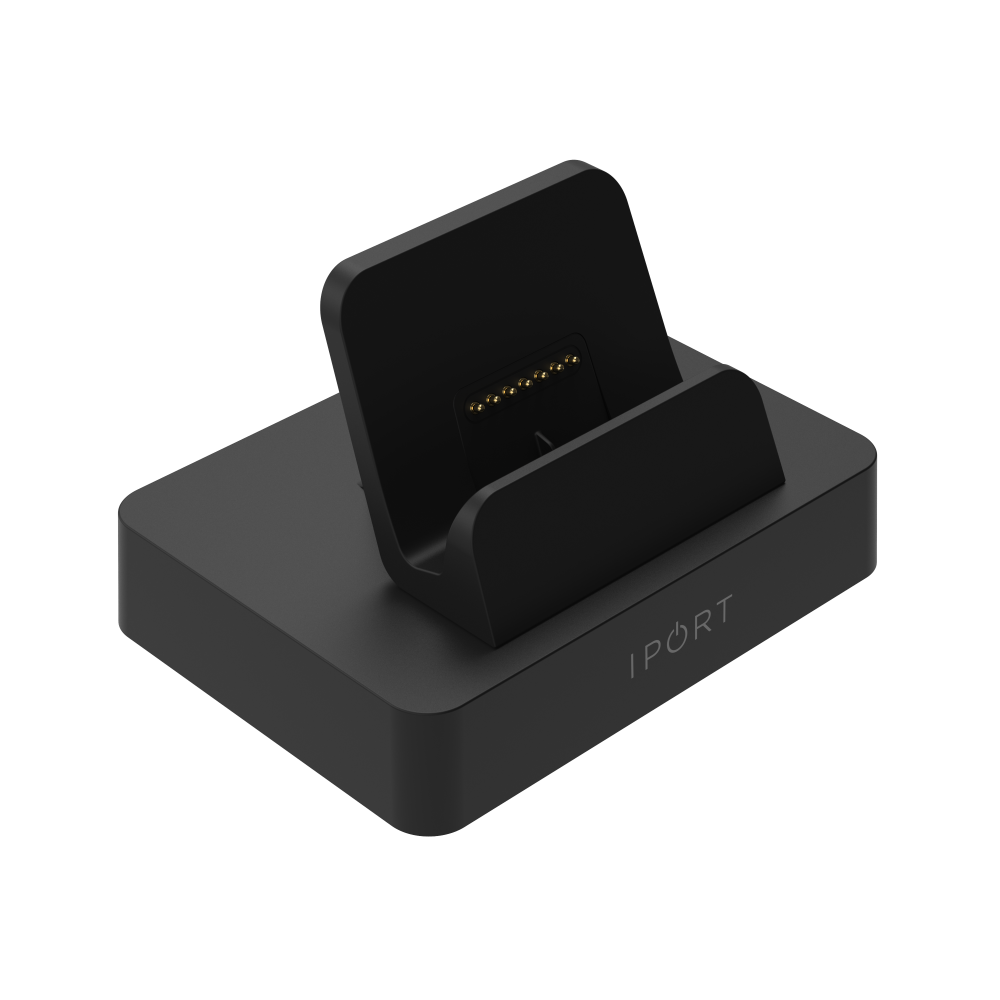
Case and dock
- Protective case for the iPad you own
- Magnetic dock — set it down, it charges
- Lifts to hand over, drops back to charge
From $300 per iPad · case $150 + dock $150
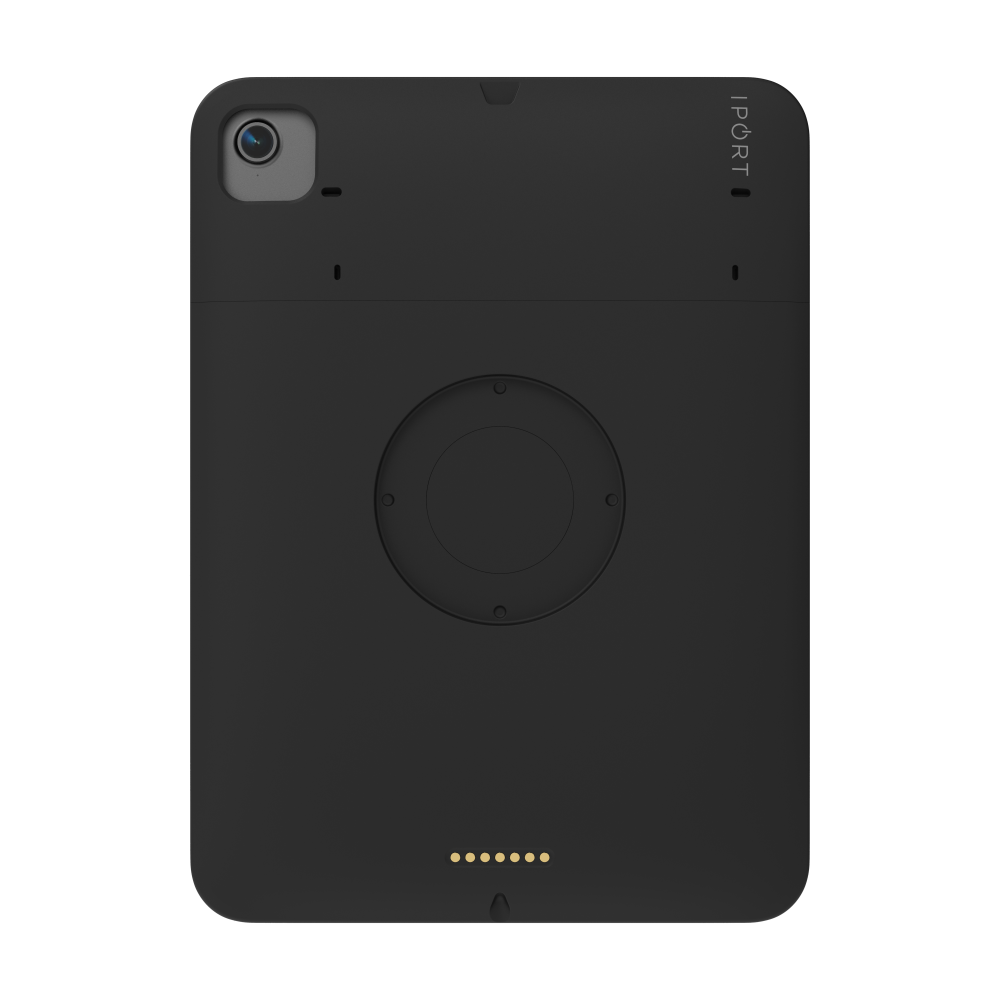
Cases, plus one charging point
- A case per iPad, matched to your models
- One shared charging station they return to
- Ends the "which one is charged?" question
Quoted to your device count
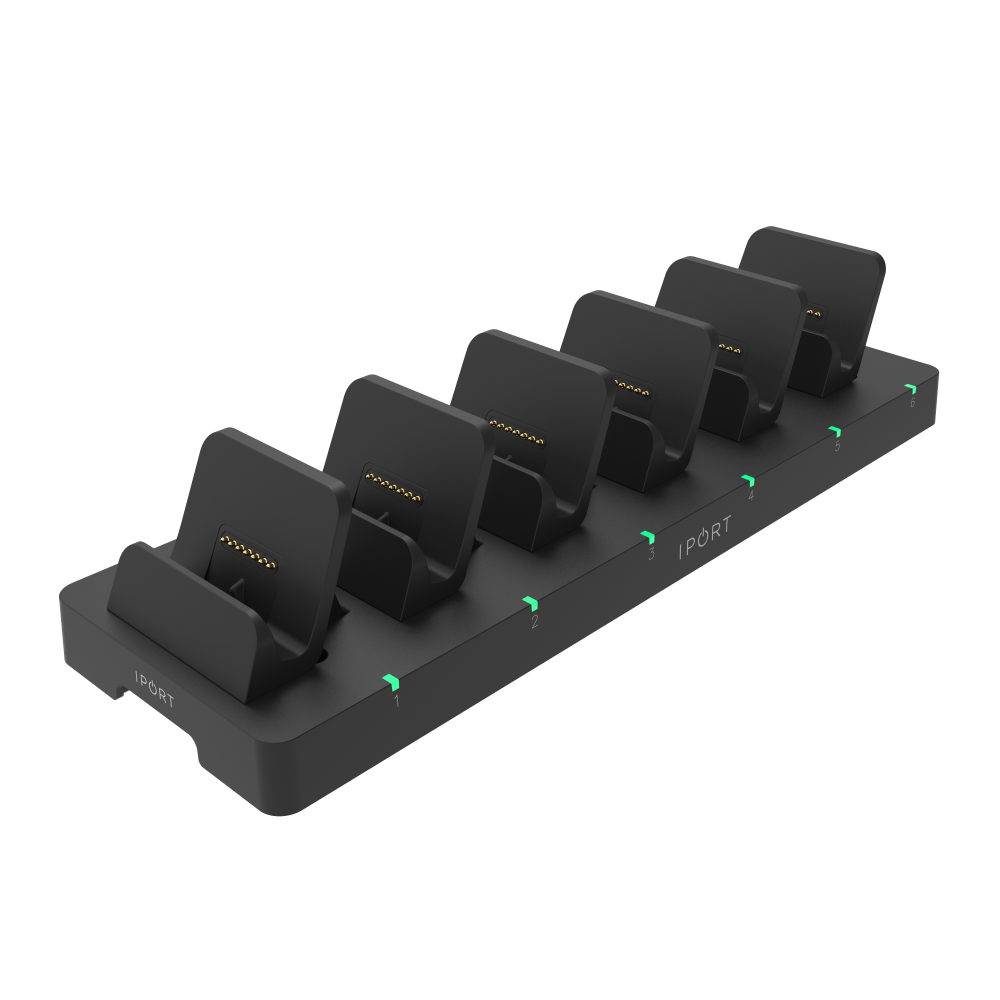
MultiDock
- Six iPads charging upright, side by side
- Numbered bays — everyone knows which is theirs
- One power lead for the whole bank
Quoted with cases for your fleet
Hardware only, and you buy it once — there is nothing recurring behind it. You already own the iPads, so there is nothing else to add.
Questions, answered.
Do I have to change the software we use?
Will it fit the iPads we already own?
Do we need an IT person to install this?
How does the charging work?
Can the iPad be cleaned between patients?
What if we want it fixed to a wall or a counter?
Tell us what you're running and we'll curate the right solution for you.
- No obligation. Your details go to IPORT's healthcare team - nobody else.
What happens next
Send the form — it takes about a minute.
IPORT's healthcare team will get to you with a curated solution.
You order what you need. There's nothing to install and nothing to migrate.
Prefer to talk it through? Call 949.226.5222.
Thanks — that's on its way to IPORT's healthcare team.
It comes from IPORT's healthcare team and arrives from an @iport.io address, so keep an eye out. In a hurry? Call 949.226.5222.